
What to Serve With Steak
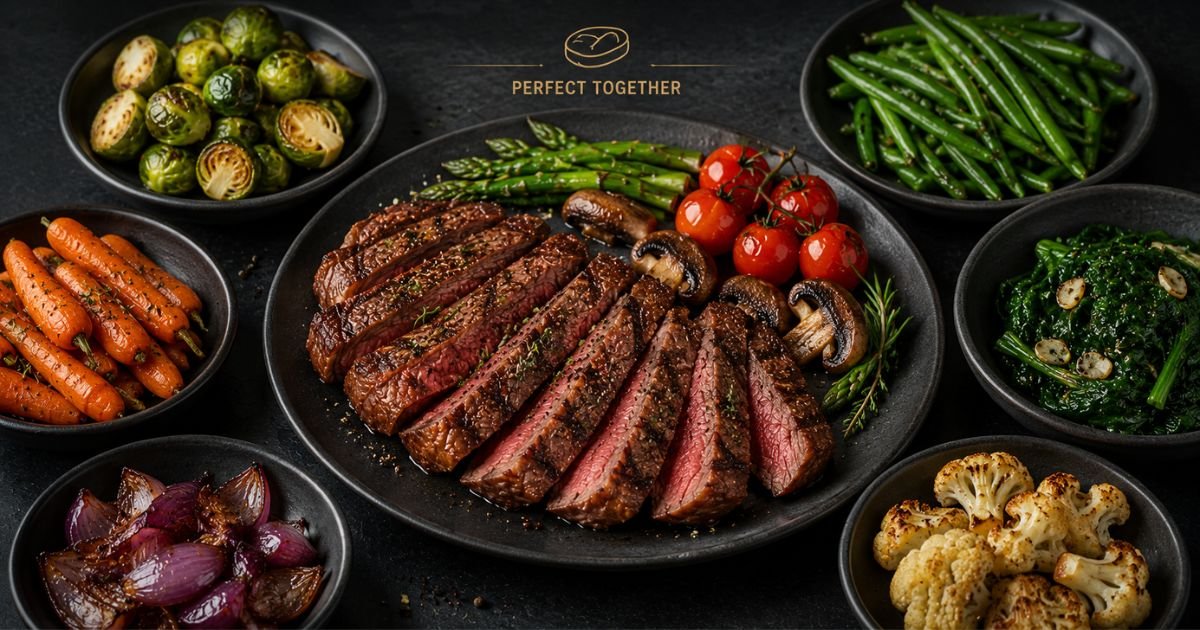
What to Serve With Steak
What to serve with steak matters more than most people expect, because the wrong pairing can bury a good cut. A rich ribeye next to a heavy cream sauce is richness on richness, with nothing to cut through it. A lean fillet next to a plain green salad can taste austere, because the meat has no fat to carry the plate. The rule that fixes both problems is simple. Match a lighter side to a richer cut, and a richer side or sauce to a leaner cut. Everything below follows from that one idea, with the actual sauces, vegetables and timings to make it work.
Steak Sauces Worth Making, and Which Cut Each Suits
A good sauce does one of two jobs. It either adds richness a lean cut is missing, or it adds acidity and bite that cuts through a fatty one. These four cover both jobs, and each one takes under 15 minutes.
| Sauce | What Goes In It | Best With |
|---|---|---|
| Peppercorn | Crushed black peppercorns, a splash of brandy, 200ml double cream, simmered 3 to 4 minutes until it coats a spoon | Sirloin, ribeye |
| Red wine jus | 250ml red wine reduced by half with 250ml beef stock, finished with a knob of cold butter | Fillet, rump |
| Garlic butter | 100g softened butter, 2 crushed garlic cloves, chopped parsley and thyme, melted and spooned over in the final minute of cooking | Almost any cut |
| Chimichurri | Flat leaf parsley, oregano, 2 garlic cloves, 3 tbsp red wine vinegar, 120ml olive oil, no cooking needed | Flank, bavette, rump |
Peppercorn is the classic steakhouse order for a reason, and it is the kind of sauce you would expect at a proper steakhouse like Miller and Carter. The crushed peppercorns give it heat without chilli, and the cream rounds it out. Red wine jus works the opposite way. It is lean and sharp, which is exactly what a mild cut like fillet needs, since the meat itself brings almost no fat to the plate. Chimichurri plays a similar role for bolder lean cuts, its vinegar acidity balancing the meat instead of adding more richness. Garlic butter is the easiest starting point of the four, as covered in how to cook steak, and it is the hardest to get wrong.
Vegetables That Earn Their Place, With Timings
Vegetables work with steak when they bring char, bite or acidity, something that contrasts with the meat rather than sitting quietly beside it. Asparagus is the most reliable choice. Toss it in olive oil and salt, then grill or roast at 200°C for 6 to 8 minutes until the tips start to crisp. Mushrooms go the other way, rich and savoury. Slice them thick and cook in butter over a medium heat for 8 to 10 minutes until golden, which makes them a natural partner for leaner cuts. For the oven, roasted carrots and Brussels sprouts at 200°C for 25 to 30 minutes develop enough caramelisation to stand up to a ribeye.
When time is short, a simple green salad with a sharp vinaigrette does the same job as the charred vegetables, the acidity cutting through the fat in a richer cut and keeping the plate from feeling heavy. Spinach or green beans, sautéed fast in butter and garlic for 3 to 5 minutes, add colour and brightness with barely any effort. What to avoid is a vegetable cooked so plainly it adds nothing. Boiled potatoes and unseasoned steamed greens are the usual culprits, and they are the reason steak dinners can feel unfinished even when the meat is cooked well.
Potato Sides and How to Time Them Around the Steak
Potatoes in some form are the classic steak side, but the three main options suit different occasions and different schedules. Roast potatoes need 45 to 50 minutes at 200°C, so they have to go in well before the steak comes out of the fridge. They are the lowest effort option once they are in the oven, and their crisp edges are built for mopping up sauce. Mashed potatoes take about 20 minutes, and they suit a special occasion dinner, particularly next to fillet, where the richness of butter and cream in the mash compensates for the leanness of the meat. Fries lean casual and cook fastest, around 25 to 30 minutes in the oven from frozen, or less in an air fryer. If you want a grain instead, a simple herbed rice or a crusty bread for soaking up sauce both round the plate out without competing with the steak.
Three Full Plates That Work
Rather than assembling sides at random, it helps to think in complete plates where every element has a job. For a quick weeknight dinner, take a sirloin, add grilled asparagus and a spoon of garlic butter. The sirloin brings strong beefy flavour, the asparagus brings char and bite, and the garlic butter ties the plate together in the final minute of cooking. For a date night or special occasion, take a fillet, add mashed potatoes and a red wine jus. The fillet is mild and tender, the mash brings the richness the meat lacks, and the jus adds the sharpness that keeps it from feeling heavy. For a casual grill night, take a rump, add grilled corn and chimichurri. The corn chars well over direct heat, and the chimichurri acidity lifts the whole plate. For more on how rump behaves as a cut, see is rump steak tender, and for the cut comparison behind these pairings, sirloin vs ribeye vs fillet.
Pairings to Skip
A few combinations reliably disappoint. A heavy cream sauce on a ribeye doubles up on richness until the plate feels cloying, so keep the sauce simple or skip it entirely with fatty cuts. Delicate, watery sides like plain steamed courgette get lost next to any steak worth eating. And strongly spiced sides, the kind built for curry or chilli, tend to bulldoze the beef flavour rather than support it. When in doubt, go simpler. A great steak deserves a plate that supports it, not one that competes with it.