
Tenderloin, Frying Steak, and Other Beef Cuts Explained
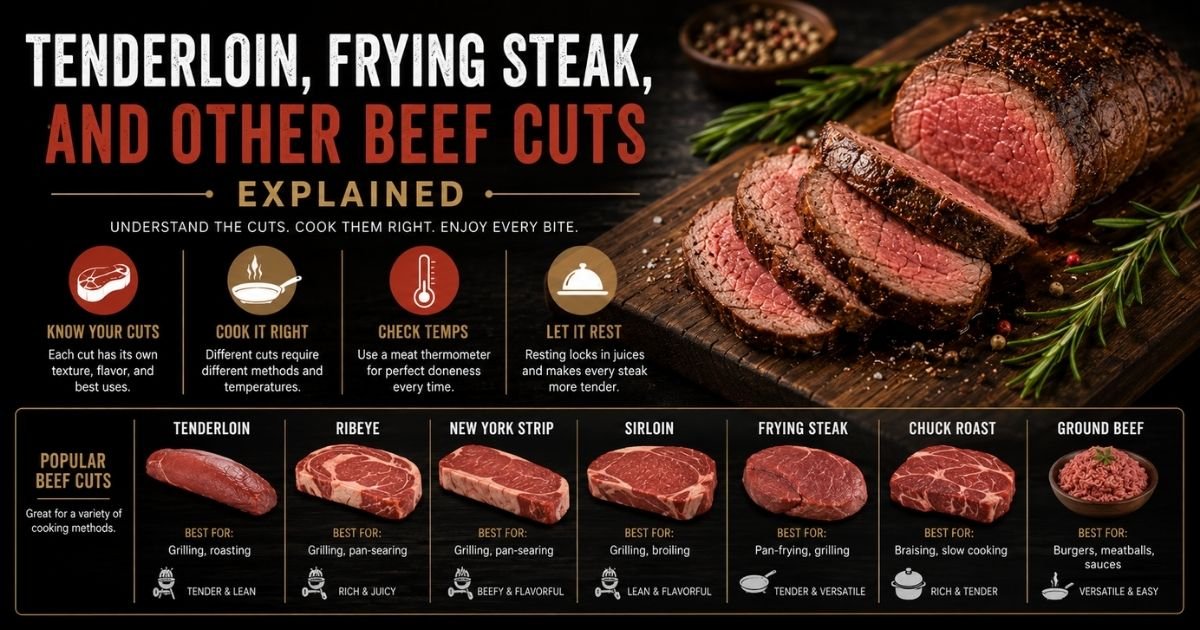
Tenderloin, frying steak, and half a dozen other labels all show up at the meat counter, and none of them explain themselves. You pick up a pack labeled frying steak with no other detail, wondering if it is secretly a premium cut in disguise or just a catch all term for whatever was left over. That confusion is common, and it usually comes down to one thing. Some of these names refer to a specific cut, and some are just a general label a shop uses for convenience.
Here is the direct answer. Tenderloin is a specific, named cut, known in the UK as fillet, taken from a muscle along the spine that barely works, which is why it is so tender. Frying steak is not a specific cut at all. It is a retail label used for whatever leaner, quick cooking cut a shop has on hand, often sirloin trim, rump, or thin cut round steak. Below, you will find exactly what each term means, what part of the animal it comes from, and how to tell the difference next time you are shopping.
What Is Tenderloin
Tenderloin cut comes from a long, narrow muscle running along the spine, tucked under the ribs where it barely gets used. That lack of movement is the entire reason it stays so tender, more tender than any other cut on the animal.
In the UK, this cut is usually sold as fillet rather than tenderloin, though both names refer to the same thing. It has a mild flavor compared to fattier cuts, since it carries very little marbling.
Best ways to cook it: a quick, hot sear works best, since tenderloin has little fat to protect it from drying out if left too long. For the full method, see how to cook steak.
What Cut Is Frying Steak
This is where most confusion starts. Frying steak is not a butchery term describing one specific muscle. It is a retail category, a label shops use for a cut that is thin, boneless, and suited to quick pan frying.
What actually ends up under that label varies. Common options include:
- Sirloin offcuts or trim
- Rump, sometimes cut thinner than a standard steak
- Thin cut topside or silverside from the round
Frying steak differs from a named cut like sirloin or rump in one key way. With sirloin or rump, you know exactly what muscle you are getting and roughly what tenderness to expect. With frying steak, that depends entirely on the shop, which is why quality and tenderness can vary a lot between packs even at the same price point.
What Part of Beef Is Used for Steak
Beef is generally split into three sections, and where a cut sits determines how suited it is to steak in the first place.
| Section | Location | Typical Cuts |
|---|---|---|
| Forequarter | Front of the animal | Chuck, brisket, shin |
| Middle | Back, along the spine | Sirloin, ribeye, tenderloin/fillet |
| Hindquarter | Rear leg and rump | Rump, topside, silverside |
The middle section produces the classic steak cuts, since those muscles do the least work and stay naturally tender. Forequarter cuts need slow cooking instead. Hindquarter cuts, like rump, sit in between, tender enough for a quick cook but firmer than middle section cuts. For a fuller visual breakdown, see steak cuts explained.
Other Beef Cuts Worth Knowing
Braising and stewing cuts: shin and chuck, tough raw but excellent after long, slow cooking.
Roasting cuts: topside and silverside, lean and better suited to a whole roast than a quick sear.
Lesser known cuts: onglet (hanger steak) and bavette, both deliver strong flavor and are popular with butchers even though they show up less often on menus.
Tenderloin vs Frying Steak vs Named Steak Cuts
| Cut | Tenderness | Price | Best Use |
|---|---|---|---|
| Tenderloin/Fillet | Highest | Highest | Quick sear |
| Sirloin | Good | Moderate | Grill, pan sear |
| Rump | Moderate | Lower | Grill, pan sear |
| Frying steak | Varies | Low to moderate | Quick pan fry |
If you are weighing tenderloin against the other named steak cuts specifically, sirloin vs ribeye vs fillet covers that comparison directly.
How to Choose the Right Cut at the Butcher or Supermarket
If a label just says frying steak, it is worth asking a few questions before you buy.
- What cut is this actually from
- Is it trimmed sirloin, rump, or something leaner like topside
- How thick is it cut
A butcher can usually answer this on the spot. A supermarket pack often cannot, so checking the small print on the label, if there is any, is your best clue. For more on how the leanest of these cuts compare, leanest steak cuts is a useful next read, and a proper steakhouse menu, like the one at Miller and Carter, is a good reference point for how these named cuts are usually presented once cooked.
FAQs
Is tenderloin the same as fillet? Yes, tenderloin and fillet refer to the same cut, tenderloin is the more common term in the US, fillet in the UK.
What cut is labeled frying steak in UK supermarkets? It varies by shop, but it is usually sirloin trim, rump, or a thin cut from the round, rather than one specific named muscle.
What part of the cow is most steak cut from? Most premium steak cuts come from the middle section of the animal, along the spine, where the muscles do the least work.
Is frying steak good quality? It can be, but quality varies more than with a named cut, since frying steak is a general label rather than a guarantee of a specific muscle.
Final Thoughts
Tenderloin is a specific, well defined cut, prized for its tenderness. Frying steak is something else entirely, a catch all label that could mean several different things depending on where you shop. Knowing the difference means you can buy with more confidence, whether you are after the guaranteed tenderness of fillet or just a reliable, quick cooking option for a weeknight dinner.