
Beef Cuts Diagram UK
Beef Cuts Diagram UK
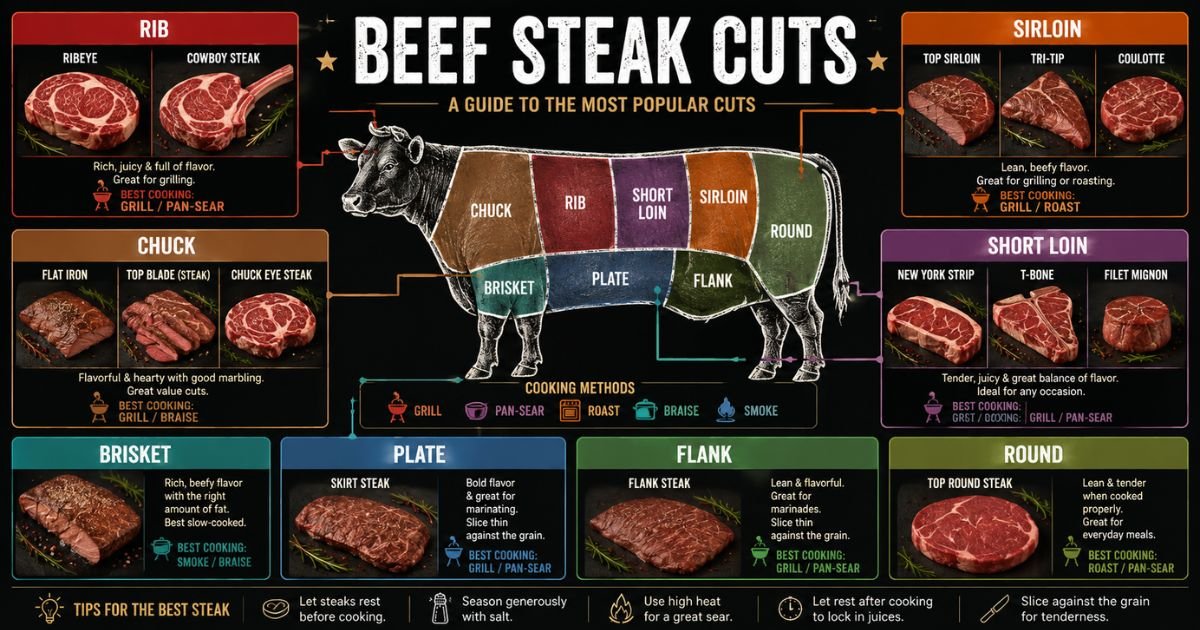
A UK beef cuts diagram looks like a puzzle the first time you see one. Names like rump, brisket, topside and silverside sit inside a cow shaped outline, and none of them tells you what the meat will taste like once it meets a hot pan. Most people respond by buying the same one or two cuts forever, which is a shame, because the diagram is really a simple map. Learn the three main sections and what each one is good for, and the whole chart starts making sense.
How a UK Butcher Divides the Carcass
| Section | Cuts found there | Best for |
|---|---|---|
| Forequarter | Chuck, brisket, shin, neck | Slow cooking, braising, stewing |
| Middle | Sirloin, ribeye, fillet, T bone | Grilling, pan searing |
| Hindquarter | Rump, topside, silverside, flank | Roasting, grilling, slow cooking |
The logic is physical. Muscles that work hard, like the shoulder and shin, develop connective tissue and need long, slow cooking to turn tender. Muscles that barely move, like the fillet running along the spine, stay naturally tender and suit fast, hot cooking. Once you see that pattern, you can guess how to cook almost any cut just from where it sits on the diagram.
The Steak Cuts, in Plain English
Sirloin comes from the middle back. It has a firm bite, a strip of fat along the edge and a strong beefy flavour, which makes it the most reliable everyday steak. Cook it to an internal 54°C to 57°C for medium rare and rest it five minutes before slicing. Full timings are in sirloin steak cooking times and temperatures.
Ribeye is cut from the rib section and is defined by marbling, the threads of fat running through the meat rather than around it. That fat bastes the steak as it cooks, which gives the rich, buttery flavour and makes ribeye forgiving if your pan runs a little hot. The method is covered in how to cook steak.
Fillet is the most tender cut on the whole diagram, taken from a muscle that does almost no work. The trade off is mild flavour and the highest price per kilo. It suits a quick sear and a strong sauce. More on it in tenderloin, frying steak and other cuts explained.
Rump sits between the sirloin and the leg. It is leaner than sirloin but still full flavoured, and usually noticeably cheaper, which makes it the value pick of the steak cuts. It rewards a hot grill and thin slicing. See is rump steak tender for a closer look at its texture.
T bone and porterhouse are a single cut containing both sirloin and fillet, separated by the bone. A porterhouse is simply a larger version cut further back, which is why it feeds two comfortably.
Bavette and flank are long, flat cuts with a visible grain. They have deep flavour for the money but turn chewy if overcooked, so cook them hot and fast, then slice thin against the grain.
Onglet, also sold as hanger steak, is the cut butchers keep for themselves. It has an almost offal like depth of flavour and is still uncommon on UK menus, so it is worth asking for at an independent butcher.
For a direct comparison of the three most popular steaks, sirloin vs ribeye vs fillet puts them side by side.
The Slow Cooking Cuts, and Why They Cost Less
Brisket, shin, chuck and neck are cheap for a structural reason, not a quality one. They are full of collagen, which is tough when cooked fast and magnificent when cooked slow. Give brisket three to four hours at a low oven temperature and that collagen melts into gelatin, which is why a well cooked brisket can outshine a mediocre sirloin for flavour per kilo spent.
The rule is simple. If a cut comes from a hard working part of the animal, give it time and moisture. If it comes from a lazy part, give it heat and speed. Mixing those up is the single most common reason a cheap cut disappoints.
UK Names vs American Names
UK butchery terms do not always match American ones, which matters when you are following a US recipe or reading an American steak guide.
| UK name | American name | Notes |
|---|---|---|
| Sirloin | New York strip or top sirloin | The American strip steak is the closest match |
| Fillet | Tenderloin or filet mignon | Same muscle, different label |
| Rump | Sirloin tip or round | Cut from a different point on the animal |
| Topside | Top round | Roasting cut in both systems |
| Silverside | Bottom round | Roasting cut in both systems |
| Brisket | Brisket | Same cut, same slow cooking |
If a recipe uses a name you do not recognise, check which section of the animal it comes from. Forequarter, middle or hindquarter tells you the cooking method faster than any translation table.
Reading the Diagram at the Counter
Most diagrams show a side profile of the animal divided by a grid of lines. Each box is a primal cut, and the smaller cuts, like a sirloin steak or a ribeye steak, are portioned from inside that larger primal. When you are buying, three questions cover almost everything: which primal is this from, how long was it aged, and how thick is it cut. A good butcher will answer all three without hesitation.
For the story behind the primals themselves, where does steak come from and steak cuts explained go deeper. Once you have chosen your cut, what to serve with steak and best cuts of beef ranked are useful next stops.
Match the cut to the method, not just the price tag, and cuts you used to walk past will start looking like the best value in the cabinet.