
How to Cook Fillet Steak Perfectly | The Grill Guide
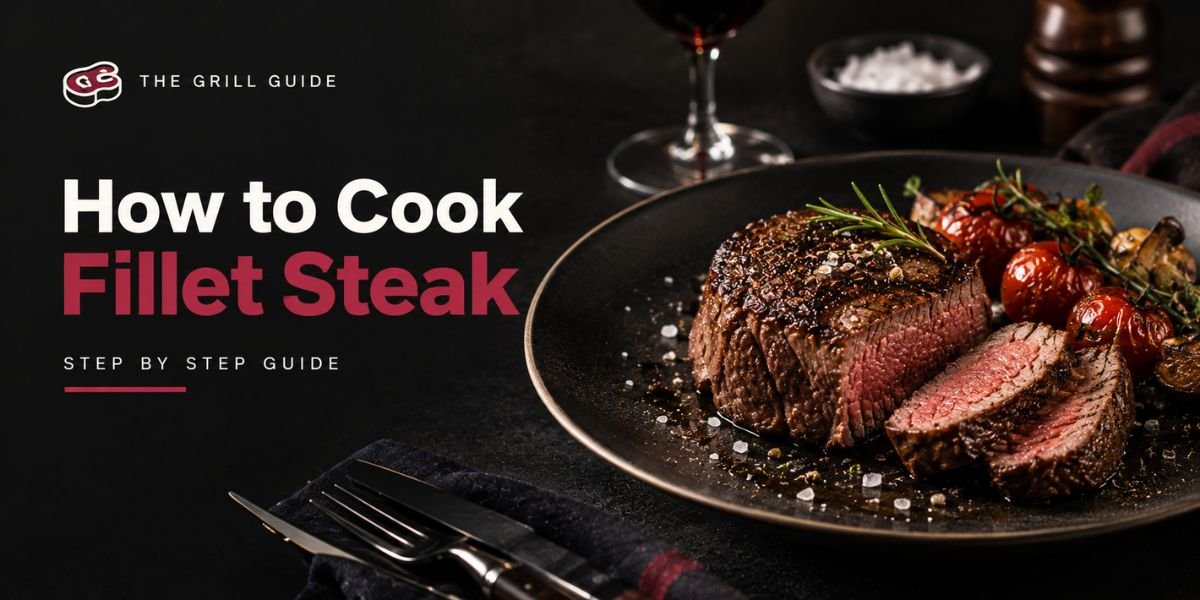
Learning how to cook fillet steak without turning an expensive cut into a rubbery disappointment trips up even confident home cooks. You have probably stood over a hot frying pan, watching the clock, unsure whether another thirty seconds means medium rare or overcooked. That uncertainty is normal. Fillet gives you almost no room for error compared with a forgiving cut like rump or sirloin.
The good news: once you know the right cooking times, the right resting routine, and a couple of simple technique tricks, this cut becomes one of the easiest things in your kitchen to get right. You need a hot pan, a thermometer or a bit of confidence with the touch test, and about fifteen minutes of your evening.
Times and Temperatures: Your Starting Point
For a 2cm thick fillet steak in a hot pan, use these timings per side as your starting point.
| Doneness | Time Per Side (2cm steak) | Internal Temp |
|---|---|---|
| Rare | 2 to 3 minutes | 50 to 52°C |
| Medium rare | 3 to 4 minutes | 55 to 57°C |
| Medium | 4 to 5 minutes | 60 to 63°C |
| Well done | 6 minutes | 68°C plus |
Thicker cuts, around 4cm, need roughly an extra minute per side, and it helps to finish them in the oven rather than leaving them in the pan the whole time.
Why Fillet Needs a Different Touch
Fillet comes from the section of the sirloin that runs along the cow’s back, and it barely does any work as the animal moves. That is exactly why it is the most tender cut you can buy. It has very little fat or marbling, so it will never be as rich as a ribeye, but the texture is famously soft and almost melts on the fork.
That leanness is also the catch. There is no fat to keep it juicy once you push past medium, so timing matters here more than with any other cut. Past medium, fillet goes from tender to chalky quickly, which is why a thermometer earns its place in the drawer for this cut above all others.
Getting It Ready: The Prep That Matters
- Take the steak out of the fridge 30 to 45 minutes before cooking so it reaches room temperature. A cold steak cooks unevenly.
- Rub lightly with a neutral oil, such as sunflower or vegetable oil, rather than olive oil, which burns at high heat.
- Season generously with sea salt just before it hits the pan. Salting right before cooking helps build a better crust.
The everyday steps — like patting the steak dry before it hits the pan — are the same as for any steak: see the What You Need section in our guide on how to cook steak.
Pan Frying: The Most Controllable Home Method
- Cook without moving it for the first minute to build a crust, then flip every 30 to 60 seconds using the timings in the table above.
- Use tongs to sear the edges for 20 to 30 seconds each, especially on thick cut steaks.
- Check doneness with a meat thermometer, or use the touch test below.
For the everyday hot-pan routine — a smoking-hot pan and laying the steak in to sizzle — see the Pan Method in our guide on how to cook steak.
The Touch Test, If You Have No Thermometer
Press the centre of the steak with a finger. Soft and springy means rare. A slight firmness with some give means medium rare. Firm all the way through means well done. It takes practice, but a thermometer removes the guesswork entirely.
Griddle Pans and the Barbecue
A ridged griddle pan works almost identically to a frying pan but adds attractive char lines. Get the griddle white hot before adding the steak, and resist the urge to move it around. The same timings from the table above apply.
For a 4cm fillet steak on a hot barbecue, cook for roughly 2 to 3 minutes per side for medium rare, then move it to a cooler part of the grill to finish if the outside is charring faster than the inside is cooking. A lid helps retain heat and cook more evenly.
Thick Fillets: Finish in the Oven
For very thick cuts, transfer the whole pan to an oven preheated to 200°C for 4 to 6 minutes depending on thickness and desired doneness. The standard sear-then-oven routine is covered in the Oven Method in our guide on how to cook steak.
Sous Vide for Edge to Edge Pink
If you want restaurant level precision, sous vide is worth trying. Cook the seasoned steak in a sealed bag at 54 to 57°C for medium rare, for around 1.5 to 2 hours. Finish with a 30 second sear per side in a screaming hot pan to build the crust. This gives an edge to edge, perfectly even doneness that pan frying alone cannot match.
Butter Basting in the Last Minute
Butter baste as usual in the last minute — see the basting step in our guide on how to cook steak. This one step adds more flavour than almost any marinade, which matters on a lean cut like fillet.
Rest It Properly
Rest your fillet steak for at least 5 minutes after cooking, loosely covered with foil — the full resting routine is covered in our guide on how to cook steak.
Sauces and Sides That Suit Fillet
Fillet is mild, so it takes well to a confident sauce. Peppercorn, béarnaise, bordelaise, or a simple garlic and herb butter all work. For everyday sides, see the Sides and Sauces section in our guide on how to cook steak.
Fillet Against Sirloin and Ribeye
| Cut | Tenderness | Flavour | Best Cooking Method |
|---|---|---|---|
| Fillet | Extremely tender | Mild | Pan fry, griddle, sous vide |
| Sirloin | Tender | Fuller flavour | Pan fry, grill |
| Ribeye | Tender with marbling | Rich, fatty | Grill, pan fry |
Fillet wins on texture, sirloin gives you more flavour for less money, and ribeye sits somewhere in between with its fat driven richness. Our full grilling and steak guide breaks down every option in more depth, and it is worth comparing your results against a trusted benchmark like Miller and Carter if you want a professional standard to aim for.
A Cut That Rewards Attention
Fillet punishes guesswork and rewards precision, but once the timings are in your head it becomes one of the fastest, most impressive meals in your repertoire. Get the pan hot, watch the clock, rest it properly, and you will have steakhouse quality on the plate in under fifteen minutes. The only real rule: do not cook it past medium unless you enjoy expensive lessons. For the full method, see our how to cook steak guide.