
How to Cook Ribeye Steak in a Pan
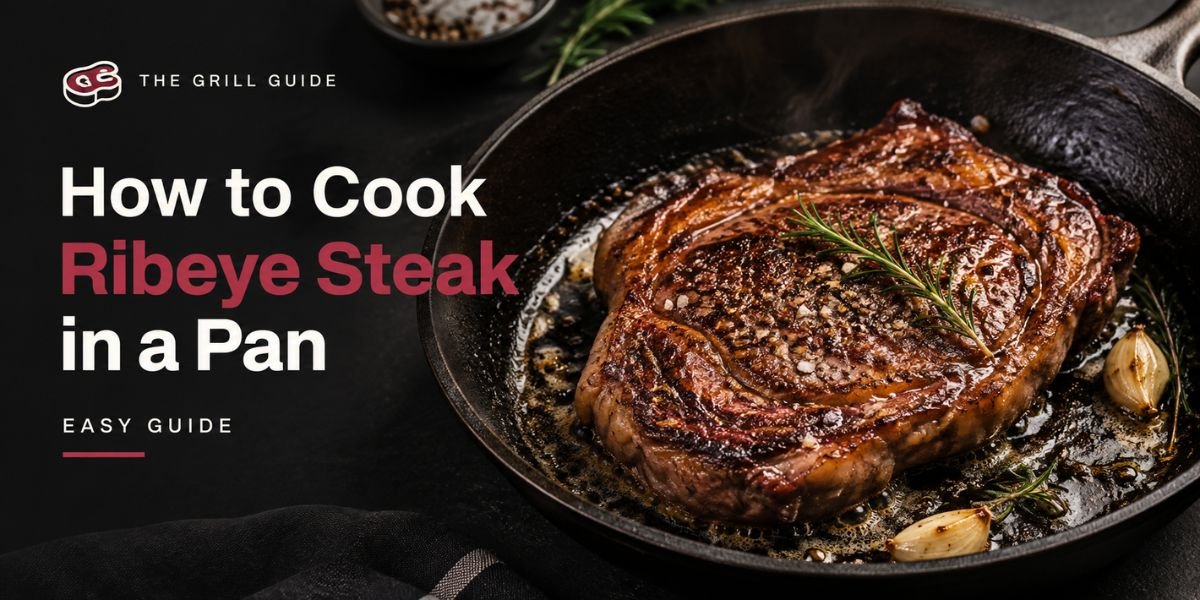
How to cook ribeye steak in a pan comes down to one habit. Heat the pan properly, then leave the steak alone. That single discipline separates a soggy, grey steak from a pan seared ribeye with a deep brown crust and a juicy pink centre. If you have burned butter, undercooked the middle, or watched a good cut of beef turn tough and chewy, you already know how frustrating it feels.
You are not doing anything wrong by hand. You are probably just missing a few small details that professional cooks rely on every time. A hot pan, a dry steak, and a bit of patience make a bigger difference than any fancy marinade. This guide breaks the whole process down step by step, using cast iron or a heavy frying pan, so you get restaurant style results on an ordinary hob at home.
The Whole Method in Eight Steps
- Heat a cast iron or heavy pan until just smoking, with the steak out of the fridge and patted dry.
- Sear 2 to 3 minutes per side without moving it, then baste with butter, garlic and thyme.
- Pull at temperature and rest 5 to 10 minutes before slicing.
That is the whole method in a nutshell. Now the detail behind each step, so you get it right every time.
For the full step-by-step routine, see the Pan Method in our guide on how to cook steak.
Buy the Right Ribeye
Look for even white marbling running through the meat rather than large chunks of fat. That marbling melts during cooking and gives ribeye its rich flavour and tenderness. A steak around 2.5 to 3cm thick is ideal for pan cooking, since it gives you time to build a crust before the middle overcooks. If you want to compare cuts before you buy, this guide to sirloin vs ribeye vs fillet breaks down tenderness, fat content and flavour side by side.
Bone In or Boneless
| Feature | Bone In Ribeye | Boneless Ribeye |
|---|---|---|
| Flavour | Slightly deeper near the bone | Consistent throughout |
| Cooking | Less even near the bone | Cooks more evenly |
| Ease in a pan | Trickier to fit flat | Easier to sear fully |
| Best for | Slow, careful searing | Quick weeknight cooking |
Which Pan to Use
A cast iron pan holds heat brilliantly and gives the deepest crust, but a heavy stainless steel frying pan works almost as well if that is what you already own. Avoid non stick pans for this job. They rarely get hot enough for a proper sear. Whichever pan you use, heat it over high heat for a full two to three minutes before adding oil. You want a faint wisp of smoke rising from the surface. A pan that is not hot enough will not give you a crust, no matter how long you cook the steak.
The Sear, In Detail
Bring the steak out of the fridge, pat it dry and get the pan smoking hot first — the standard prep is covered in our guide on how to cook steak.
Season generously with salt on both sides. Many cooks hold back on pepper until after cooking, since it can catch and burn under high heat. Add a tablespoon of a high smoke point oil, such as vegetable or sunflower oil, then lay the steak away from you to avoid splashing. Leave it completely alone for 2 to 3 minutes. Moving it too early stops a proper crust forming and can tear the surface. Flip once, then sear the second side for another 2 to 3 minutes.
Once both sides are browned, turn the heat down slightly and add a knob of butter, a crushed garlic clove and a sprig of thyme. Tilt the pan and spoon the melted butter over the steak repeatedly for a minute or two. This adds flavour and helps finish the cooking gently.
Temperatures: Pull It Before It Looks Done
A meat thermometer takes the guesswork out completely — see the Doneness section in our guide on how to cook steak. The temperature will rise a further 2 to 3 degrees while the steak rests, so pull it early.
| Doneness | Remove From Pan At | Rested Temperature |
|---|---|---|
| Rare | 46 to 48°C | 49 to 50°C |
| Medium rare | 52 to 54°C | 55 to 57°C |
| Medium | 58 to 60°C | 60 to 63°C |
| Medium well | 63 to 65°C | 66 to 68°C |
| Well done | 68°C and above | 71°C and above |
If you do not own a thermometer, press the centre of the steak with a finger. Medium rare gives gently, similar to pressing the muscle at the base of your thumb when your hand is relaxed. And never cover the pan: trapped steam softens the crust you are trying to build.
Resting and Slicing
Rest the steak as usual — the full resting routine is covered in our guide on how to cook steak. Move it to a warm plate, cover loosely with foil, slice against the grain for the most tender bite, then spoon any leftover butter from the pan over the top. For side dish inspiration, this guide on what to serve with steak covers everything from classic chips to lighter salads.
Five Ways to Ruin a Good Ribeye
Most ribeye failures are the usual steak mistakes — cold steak, a crowded or lukewarm pan, too much flipping and no rest — see the Mistakes section in our guide on how to cook steak.
Done It Once, Do It Forever
Cooking a ribeye well in a pan is really about confidence and timing rather than a long list of ingredients. Get the pan properly hot, season simply, leave the steak alone while it sears, and always let it rest before you cut in. Once you have done it a couple of times, this becomes second nature, and you will not need a recipe at all. If you would rather eat out, UK steakhouse chains such as Miller and Carter and Bar and Block are well known for their steak menus. For a broader look at cooking every cut properly at home first, this general guide to how to cook steak is a useful starting point, and The Grill Guide covers more cuts and techniques.