
How to Cook Steak
How to Cook Steak
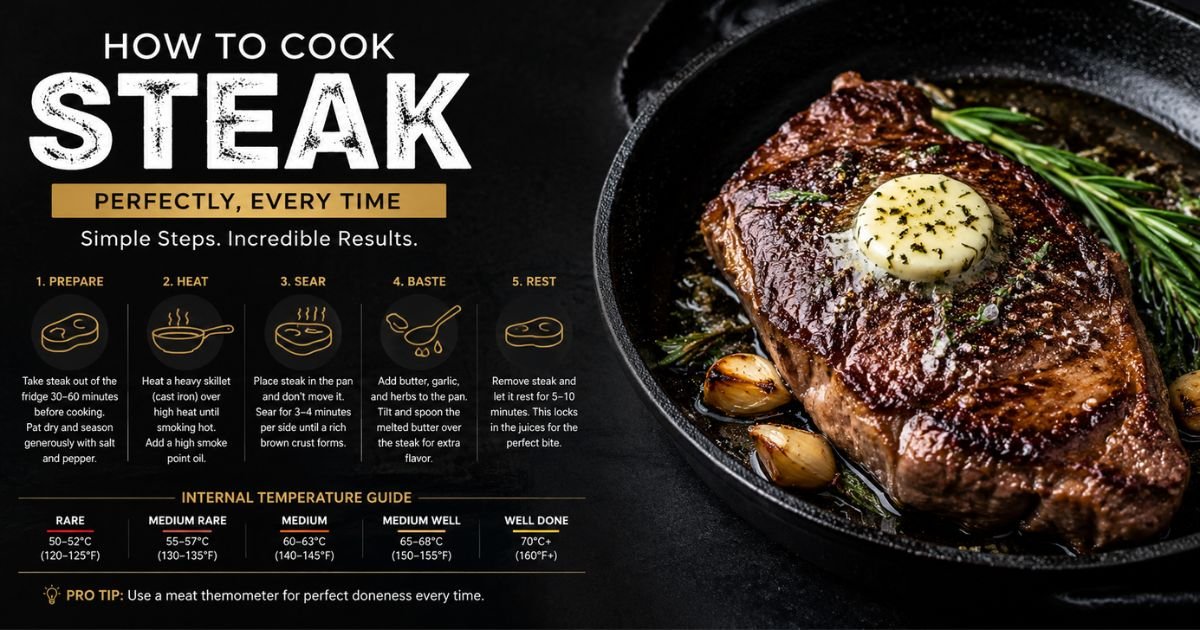
How to cook steak well comes down to three things: heat control, timing, and a good rest at the end. Get those right and you can turn a plain cut of beef into something that tastes like it came from a steakhouse.
You have probably been there. You buy a nice ribeye or sirloin, get the pan screaming hot, and somehow it still comes out grey, chewy, or dry in the middle. Most guides skip the small details that actually matter, like why your steak should never go straight from the fridge into the pan, or why poking it with a fork ruins the crust. This guide fixes that.
The fast answer: pat your steak dry, season it well, sear it in a hot pan with oil for two to four minutes per side, add butter and aromatics near the end for flavour, then rest it for five to ten minutes before cutting. Use a meat thermometer to hit your exact doneness, not a clock. Everything below breaks that down step by step, with oven, grill, and reverse sear methods, so you can pick what fits your kitchen tonight.
What You Need
- Cut of steak: ribeye, sirloin, fillet, T-bone, or New York strip all work well.
- Thickness: aim for at least 2.5cm. Thinner cuts overcook fast.
- Oil: something with a high smoke point, like rapeseed or vegetable oil.
- Fat: butter, plus garlic and herbs for basting.
- Tools: a heavy pan (cast iron is ideal), tongs, and an instant read meat thermometer.
Take your steak out of the fridge 30 to 40 minutes before cooking. A cold steak hits a hot pan unevenly, so the outside overcooks while the centre lags behind.
Doneness Is a Temperature, Not a Clock
Doneness is really just internal temperature. A thermometer removes the guesswork completely.
| Doneness | Pull Temperature | After Resting |
|---|---|---|
| Rare | 46°C | 49°C |
| Medium rare | 52°C | 54 to 57°C |
| Medium | 57°C | 60 to 63°C |
| Medium well | 63°C | 66°C |
| Well done | 68°C | 71°C |
Pull the steak off the heat about 3 degrees before your target. It keeps cooking while it rests, a process called carryover cooking. No thermometer handy? Press the steak with your finger. Rare feels soft, like the base of your thumb when your hand is relaxed. Well done feels firm, closer to your palm when you make a fist.
The Pan Method
- Pat the steak completely dry with paper towels. Moisture on the surface stops it from browning.
- Season generously with flaky sea salt and black pepper on both sides.
- Heat a heavy pan over high heat until it just starts to smoke.
- Add oil, then lay the steak away from you to avoid splatter.
- Sear 3 to 4 minutes per side without moving it. This builds the crust.
- In the last minute, add butter, garlic cloves, and thyme or rosemary. Tilt the pan and spoon the melted butter over the steak repeatedly.
- Check the temperature, pull the steak, and rest it on a board for 5 to 10 minutes.
That basting step is what separates a home cooked steak from one that tastes like it came from a professional kitchen.
The Oven Method for Thick Steaks
- Preheat your oven to 200°C, or 180°C with the fan on.
- Sear the steak in an oven safe pan for 2 minutes per side on the hob.
- Transfer the whole pan to the oven.
- Cook 6 to 10 minutes depending on thickness and desired doneness.
- Rest before slicing.
This sear then oven method gives you a deep crust and an evenly cooked centre, without babysitting the hob the whole time.
On the Grill
- Preheat the grill to high heat, with a direct heat zone.
- Oil the grates, not the steak, to prevent sticking.
- Sear 3 to 5 minutes per side over direct heat.
- For thicker cuts, move to indirect heat to finish without burning the outside.
- Rest for 5 to 10 minutes off the grill before cutting.
Grilling adds a smoky char that a pan cannot replicate. For more grilling specifics by cut and thickness, The Grill Guide has a deeper breakdown worth checking before your next barbecue.
Reverse Sear and Sous Vide: For the Thickest Cuts
For steaks of 5cm or more, these two methods give you the most control. Reverse sear means cooking the steak low and slow in a 120°C oven until it is close to your target temperature, then finishing it with a hard sear in a hot pan for a minute or two per side. It produces an edge to edge even colour with almost no grey band.
Sous vide takes it further. The steak cooks in a water bath at your exact target temperature, so it is essentially impossible to overcook. You still sear it in a hot pan afterwards for colour and crust.
Mistakes That Cost You a Good Steak
- Cooking straight from the fridge, which leads to uneven doneness.
- Skipping the pat dry step, which prevents a proper crust.
- Moving the steak too soon, which tears the sear before it forms.
- Cutting into it right off the heat, which lets all the juice run out.
- Overcrowding the pan, which drops the temperature and steams the meat instead of searing it.
On food safety, current safe cooking temperatures are worth a quick check, especially for ground beef and less common cuts. You can find them on FoodSafety.gov.
Sides and Sauces That Do Not Compete
| Category | Options |
|---|---|
| Sauce | Peppercorn, red wine shallot, garlic butter, chimichurri |
| Starch | Roasted potatoes, mashed potatoes, fries |
| Vegetable | Grilled asparagus, sauteed mushrooms, a simple green salad |
Pick Your Method and Trust the Thermometer
There is no secret recipe, just heat, timing, and patience during the rest. Pick the method that fits your kitchen and your cut, follow the steps above, and check your temperature instead of guessing. Do that, and the next steak you cook will be the best one you have made at home.