
Sirloin vs Ribeye vs Fillet
Sirloin vs Ribeye vs Fillet
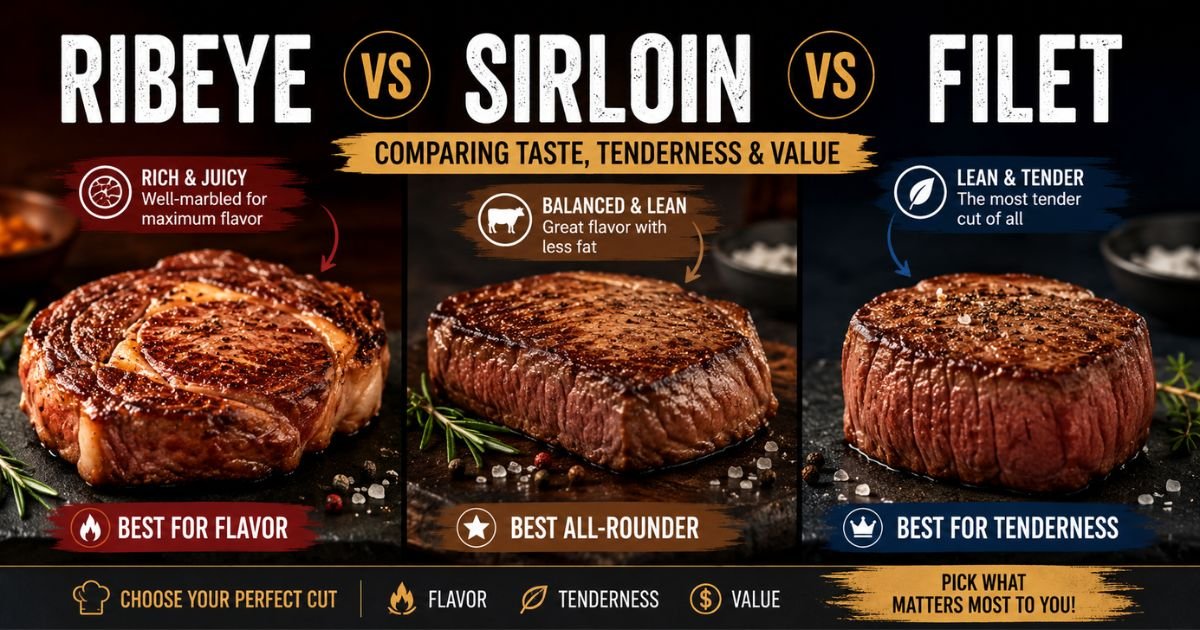
Sirloin vs ribeye vs fillet is the decision that stalls most people at the meat counter. Three names, three very different price tags, and no label explaining what you are actually paying for. Pick wrong and dinner is either tougher than expected or milder than the money suggested. The differences come down to three things, where each cut sits on the animal, how much fat runs through it, and how little of it each animal yields. Once those three are clear, the choice mostly makes itself.
Where Each Cut Comes From on the Animal
Ribeye is cut from the rib primal, roughly ribs 6 to 12, and that position is the whole story behind its character. The muscles here do moderate work, and fat deposits heavily between the muscle fibres, which is the marbling you see as white streaking. Sirloin, in UK butchery, is the striploin, the longissimus dorsi muscle running along the back just behind the ribs. It works a little harder than the rib section, so it carries less marbling but a firm, beefy grain. One naming trap to know: American “sirloin” is a different cut from the hip, while UK sirloin is what Americans call a strip steak or New York strip. Fillet is the psoas major, the tenderloin tucked beneath the spine where it barely moves at all. That lack of work is why it is the most tender cut on the animal, and also why it carries almost no fat.
What They Cost in the UK
Price tracks two things, tenderness and scarcity. Each animal yields only a small tenderloin, a limited run of ribeyes, and a longer striploin, which is why the prices stack the way they do. Figures below are typical UK supermarket prices per kilo, and they move with the season and the region, so treat them as a guide rather than a quote. Butchers usually charge more, but the ordering stays the same everywhere.
| Cut | Typical Supermarket Price per Kilo | Why It Costs That |
|---|---|---|
| Sirloin | £28 to £40 | Long muscle, good yield per animal, moderate fat |
| Ribeye | £32 to £48 | Shorter primal, heavy marbling, strong demand |
| Fillet | £55 to £80 | Tiny yield per animal, most tender cut available |
Flavour and Texture, Cut by Cut
Ribeye delivers the boldest flavour of the three, and it is entirely down to fat. As the marbling melts during cooking, it bastes the meat from the inside, which keeps the steak juicy and gives it a rich, almost buttery character. That same fat makes ribeye the most forgiving cut here. If you overshoot your timing slightly, the fat protects it from drying out in a way lean cuts cannot match.
Sirloin trades some of that richness for a firmer chew and a deep, straightforward beefiness that stands up well to bold seasoning. It has a moderate, even layer of fat rather than heavy marbling, so it tastes like steak in the most direct sense, less luxurious than ribeye, more characterful than fillet. Cooked right, with a hard sear and a proper rest, it is the cut many chefs reach for when they are eating steak themselves rather than serving it.
Fillet is the outlier. Its texture is unmatched, soft enough to cut with a fork when cooked to medium rare, because the psoas major does almost no work. But the same leanness that makes it tender leaves it mild. On its own it can taste underwhelming next to a ribeye, which is why it is so often paired with a rich sauce or wrapped in pastry, as in beef Wellington, a classic use covered in what to serve with beef Wellington. If leanness is your priority rather than tenderness alone, leanest steak cuts compares it against the other low fat options.
How to Cook Each One
The cut decides the method, because fat content decides how much punishment the steak can take. Ribeye wants a simple pan sear with butter basting, and it is happy from rare through to medium, since the fat keeps it juicy across that range. Pull it 3 to 5 degrees below your target and let carryover cooking finish the job. Sirloin does best with high heat, either a hard pan sear or direct grilling, and it rewards a thermometer more than the other two, because its moderate fat gives you a narrower window between juicy and dry. For exact times per doneness, our sirloin cooking guide breaks it down step by step. Fillet needs the gentlest hand. Sear it quickly on high heat, then rest it well, since its leanness means it dries out fast if left on the heat too long. Aim for medium rare, around 52°C internal, and resist cooking it further, as higher doneness wastes the tenderness you paid for. If you do want it cooked through, how to cook a well done steak covers the technique that does the least damage.
Which One to Buy
For a weeknight dinner where value matters, buy sirloin. It delivers genuine steak flavour at the lowest price of the three, and it grills or pan sears without fuss. For a beginner cooking at home, buy ribeye. Its fat makes it the most forgiving cut if your timing is slightly off, which removes most of the anxiety from the cook. For a special occasion, buy fillet, but plan the plate around it, with a red wine jus or peppercorn sauce and a richer side, since the meat needs that support. If you are still weighing options beyond these three, best cuts of beef ranked and steak cuts explained cover the wider lineup, and leanest steak cuts is useful if fat content is your main concern. For the full searing method that applies to all three, see how to cook steak, and a steakhouse menu like the one at Miller and Carter is a good reference for how these cuts are usually presented once cooked.