Where Does Steak Come From?
Where does steak come from is one of those questions that feels almost too basic to ask out loud, until you actually try to answer it. You know steak comes from a cow, but past that, most people could not point to where on the animal a ribeye sits versus a sirloin, or explain why one cut costs three times as much as another from the same animal. That gap in understanding is exactly why cuts, prices, and cooking advice can feel so confusing at the meat counter.
Here is the direct answer. Steak comes from specific muscles on a cow, mostly along the back and rear, where the muscle does the least work and stays naturally tender. The animal is divided into three broad sections, forequarter, middle, and hindquarter, and the vast majority of steak cuts come from the middle section. Below, you will find exactly how a live animal becomes the cuts you recognize, and why some parts of the cow make far better steak than others.
Where Does Steak Come From
Where does beef steak come from starts with basic anatomy. A cow’s body is made up of muscles that work at very different intensities. Muscles near the legs and shoulders work constantly to support the animal’s weight and movement. Muscles along the spine barely move at all.
That difference in workload is the entire reason some cuts are naturally tender and others are naturally tough. Hardworking muscles build up more connective tissue, which makes the meat chewier unless it is cooked low and slow. Muscles that rarely work stay soft, which is exactly what makes them suitable for a quick, hot cooking method like grilling or pan searing.
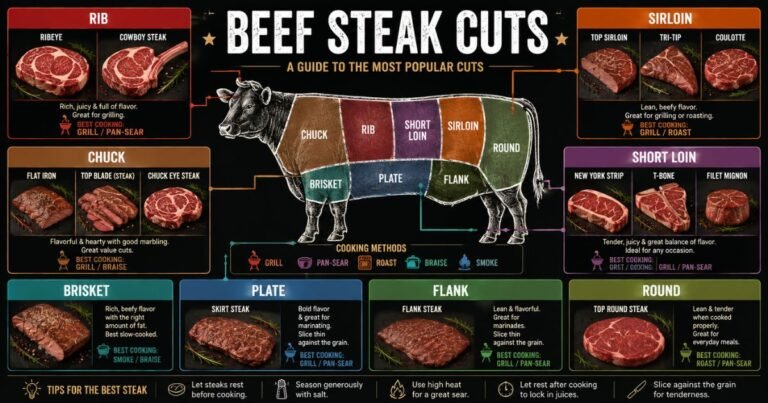
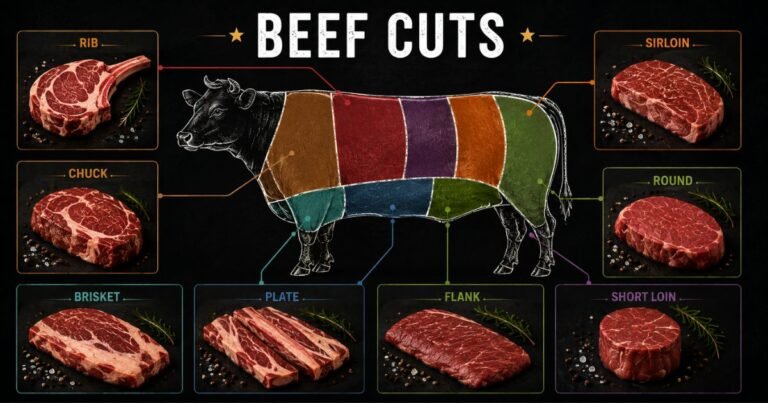
From live animal to butcher cuts, the process follows a defined path. After processing, the carcass is split into primal cuts, large sections corresponding to specific parts of the body, which are then broken down further into the individual cuts sold at the counter, sirloin, ribeye, rump, and so on. For the full cooking method once you have your cut, see how to cook steak.
The Three Sections of a Cow Used for Meat
| Section | Location | Muscle Activity | Typical Cuts |
|---|---|---|---|
| Forequarter | Front, shoulder, and chest | High | Chuck, brisket, shin |
| Middle | Back, along the spine | Low | Sirloin, ribeye, fillet |
| Hindquarter | Rear leg and rump | Moderate | Rump, topside, silverside |
How Cow Cuts Become Steak Specifically
Not every part of the cow is suited to becoming steak. Cow cuts meat intended for steak needs to come from muscles low in connective tissue, which is why the middle section supplies most of the classic steak cuts. Muscles from the forequarter, which work hard supporting the animal’s front end, are far better suited to slow cooking methods like braising, where time breaks down the toughness instead of quick heat.
The rest of the animal does not go to waste either. Tougher cuts become stewing meat, mince, or slow roasts, and organ meats and other cuts serve entirely different culinary purposes.
Meat Cuts Steak Comes From, One by One
Sirloin: from the middle back, firm texture, strong beefy flavor. See sirloin steak cooking times and temperatures for exact timing.
Ribeye: from the rib section, known for heavy marbling and rich flavor.
Fillet/Tenderloin: from a muscle along the spine that does almost no work, the most tender cut available, detailed further in tenderloin, frying steak and other cuts explained.
Rump: from the hindquarter, leaner and firmer than sirloin but full of flavor, see is rump steak tender.
T-Bone/Porterhouse: a single cut containing both sirloin and fillet, separated by the T shaped bone.
For a direct comparison of the three most popular cuts, see sirloin vs ribeye vs fillet, and for the full ranked lineup, best cuts of beef ranked.
Why Location on the Animal Determines Tenderness
Tenderness comes down to two factors working together, how much a muscle is used and how much fat runs through it. Low use plus decent marbling, like ribeye, gives you a tender, flavorful cut. Low use with very little fat, like fillet, gives you maximum tenderness but milder flavor. High use, regardless of fat content, gives you a tougher cut better suited to slow cooking.
UK vs Other Countries: Different Names for the Same Cuts
Cut names are not universal. What is called sirloin in the UK is not always split at the exact same point elsewhere, and some cuts common in one country barely appear in another. If a recipe or menu uses an unfamiliar term, tracing it back to which of the three main sections it comes from is usually the fastest way to understand what you are actually buying. A menu at a dedicated steakhouse, like Miller and Carter, is a useful real world reference for how these named cuts are typically presented once cooked.
FAQs
What part of the cow does steak come from? Most steak comes from the middle section of the cow, along the spine, where the muscles work the least and stay naturally tender.
Is steak from a specific breed of cow? Steak can come from various beef breeds, though breed, diet, and how the animal was raised all affect flavor and marbling more than breed alone.
Why do some cuts cost more than others? Price generally reflects tenderness and how much usable meat a section of the animal yields, tender cuts like fillet are limited in quantity, which drives the price up.
What is the most common cut used for steak? Sirloin is one of the most widely sold and cooked steak cuts, offering a reliable balance of flavor, tenderness, and price.
Final Thoughts
Understanding where steak comes from turns a confusing wall of cut names into something you can actually reason through. Once you know the animal is split into forequarter, middle, and hindquarter, and that tenderness tracks with how little a muscle works, choosing the right cut for the right meal gets a lot easier.