
How to Tenderize Steak: 8 Methods That Actually Work
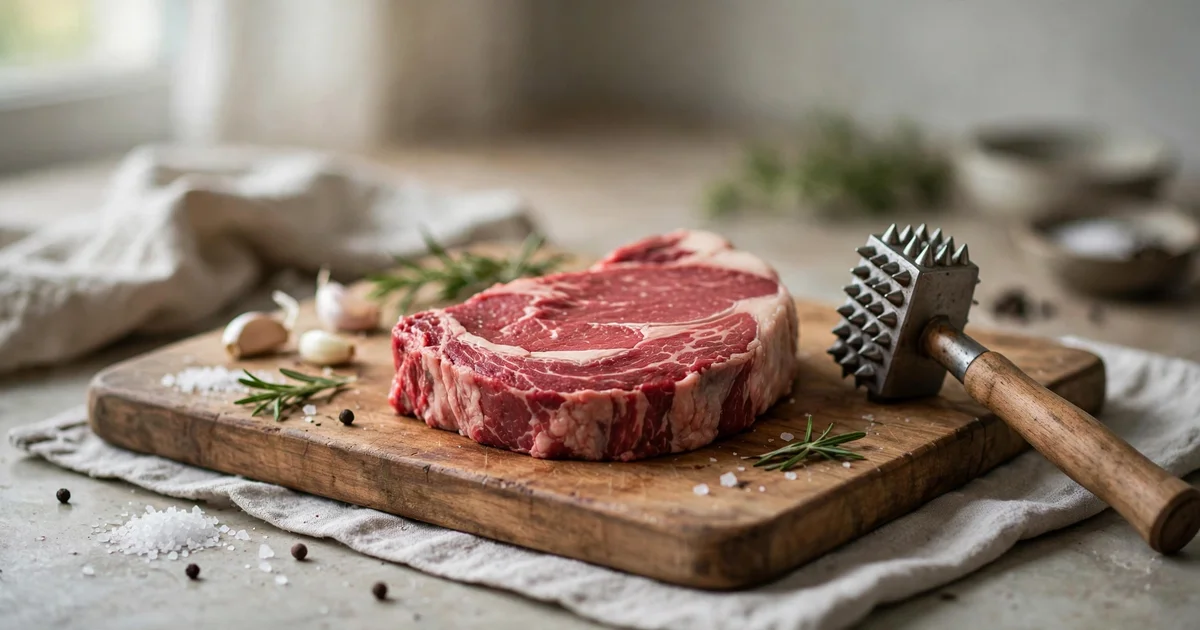
How to Tenderize Steak
Learning how to tenderize steak is the difference between a chewy supper and a genuinely good one. Toughness comes from two things: long muscle fibres that resist the bite, and connective tissue that has not had time to soften. The quick version: salt thick steaks 45 minutes to a day ahead, pound or score thin tough cuts, marinate flank and skirt style cuts for a few hours, and give collagen rich cuts like chuck the low and slow treatment. This guide covers each method with honest timings, which cuts each suits, and the mistakes that turn good beef bad.
If you are not sure which cut you are holding, our ranking of the best cuts of beef will help you place it before you pick a method.
How to tenderize steak: the methods at a glance
The table below compares every method covered in this guide. Pick your row based on the cut and the time you have, then read the section that follows for the full technique.
| Method | What it does | Best for | Time needed | Watch out for |
|---|---|---|---|---|
| Salt, dry brining | Salt draws out moisture then pulls it back in, seasoning the meat through and loosening its proteins | All cuts, especially thick steaks | 45 minutes to overnight | Pat the surface dry before searing so it browns properly |
| Meat mallet | Physical force shortens the muscle fibres and evens out thickness | Thin, uneven cuts such as minute steak and thin rump | 2 to 3 minutes | Work from the centre outward and stop before it goes paper thin |
| Scoring | Shallow cuts across the surface sever surface fibres and stop the steak curling in the pan | Flank, skirt, thin sirloin | About 1 minute | Keep cuts shallow, about 3mm deep, so juices do not escape |
| Blade tenderiser | Rows of needle blades pierce the meat, cutting fibres and connective tissue without flattening it | Rump and chuck steaks | 1 to 2 minutes | Wash the tool thoroughly after use, as it pierces raw meat deeply |
| Acidic marinade | Vinegar, citrus or yoghurt loosens surface proteins and adds flavour at the same time | Flank, skirt, bavette | 2 to 12 hours | Acid only reaches the surface, and too long turns the edges mushy |
| Enzymatic marinade | Fruit enzymes such as bromelain from pineapple break down proteins quickly | Thin, very tough cuts | 15 minutes to 2 hours | Over marinating makes the texture mushy and grainy |
| Baking soda | Raises the surface pH so the proteins grip each other less tightly as they cook | Stir fry strips and thin steaks | 15 to 60 minutes | Rinse thoroughly and pat dry, or a soapy taste remains |
| Low and slow cooking | Gentle heat over hours melts tough collagen into soft gelatin | Chuck, brisket, shin and other hard working cuts | 3 to 6 hours | Not for premium quick cooking cuts, which go dry and stringy |
Salt it ahead: dry brining
Dry brining is the simplest way to tenderise a good steak, and it suits every cut. Sprinkle coarse salt generously over all sides, about half a teaspoon per 250g, and set the steak uncovered on a rack in the fridge. At first the salt pulls moisture to the surface; given 45 minutes or more, that moisture is drawn back in, seasoning the meat through and loosening the protein structure so it eats more tenderly.
For steaks under 2.5cm thick, 45 minutes to an hour is enough, while thick cut ribeye or sirloin benefits from an overnight rest. Before cooking, pat the surface dry with kitchen paper. A dry surface browns; a wet one steams. For the full method, see our guide to cooking steak.
Pound it flat: the meat mallet
A meat mallet works by brute force, and it is the right tool for thin, uneven or naturally tough steaks. Place the steak between two sheets of cling film or baking parchment, then pound with the flat side, starting at the centre and working outward with even pressure. Flip it and repeat on the other side.
Aim for an even thickness of about 1cm to 1.5cm, not a wafer. Pounding too hard tears the fibres and leaves the steak ragged. This method suits minute steaks, thin rump and any steak that varies in thickness end to end. It is wasted effort on fillet, which is already tender.
Score the surface
Scoring means cutting a shallow crosshatch into the surface with a sharp knife, each cut about 3mm deep and spaced roughly 2cm apart, running across the grain. It severs the long surface fibres so they cannot contract and toughen in the heat, and it stops thin steaks curling up in a hot pan.
Scoring shines on flank, skirt and thin sirloin, cuts whose long fibres are the main source of chew, and it gives marinades more surface to cling to. Keep the cuts shallow: deeper than 3mm and juices escape during cooking. If you are comparing cuts, our comparison of sirloin, ribeye and fillet shows which ones have the long grained structure that scoring fixes.
Use a blade tenderiser
A blade tenderiser, sometimes sold under the Jaccard name, is a handheld tool with dozens of thin sharp blades. Press it firmly and evenly over the steak and the blades pierce through the fibres and connective tissue, creating tiny channels without flattening the meat. It is faster and more even than a mallet and works well on rump and chuck steaks.
The trade off is food safety. Because the blades drive surface bacteria deep into the meat, a blade tenderised steak should be cooked through rather than served blue or rare. Wash the tool in hot soapy water immediately after use. For fillet, the blades are unnecessary; our fillet steak cooking guide assumes no tenderising at all.
Marinate with acid
Acidic marinades made with vinegar, wine, citrus juice or yoghurt loosen the proteins on the surface while adding flavour. A practical all rounder is 60ml of red wine vinegar or lemon juice mixed with 60ml of olive oil, two crushed garlic cloves, a teaspoon of salt and a pinch of sugar, enough for two flank style steaks. Submerge the meat fully, cover, and refrigerate for two to four hours; tougher thin cuts can go up to 12.
Be honest about the limits: acid barely penetrates beyond the surface, so this method flavours and softens the outside rather than transforming the whole steak. Marinate too long and the surface turns chalky and mushy while the centre stays tough. Always marinate in the fridge, never on the counter, and discard used marinade rather than reusing it as a sauce unless you boil it first.
Marinate with fruit enzymes
Pineapple, papaya, kiwi and figs contain natural enzymes, bromelain in pineapple and papain in papaya, that break down meat proteins far faster than acid. A marinade with a few tablespoons of fresh pineapple juice can noticeably soften a tough thin steak in 15 to 30 minutes, and two hours is the practical maximum.
Speed is both the advantage and the danger. These enzymes do not stop at the surface, and an hour too long turns the texture from tender to mushy and oddly grainy, a change you cannot reverse. Use fresh fruit rather than tinned, since canning heat destroys the enzymes, and keep a close eye on the clock. For thin steaks you plan to sear fast, our ribeye in a pan method shows the searing technique to use once the marinade has done its work.
Try baking soda for thin cuts
Baking soda, or bicarbonate of soda, is the quiet shortcut behind many tender stir fry beef dishes. Dissolve one teaspoon in 250ml of cold water, soak thinly sliced steak for 15 to 60 minutes in the fridge, then rinse very thoroughly under cold water and pat completely dry. The alkaline soak raises the pH at the surface, so the proteins bond less tightly as they cook.
This suits strips destined for a wok or a fast pan fry, not a thick steak you want to serve pink in the middle. The rinsing step is not optional: any baking soda left on the surface leaves a soapy, metallic taste. Pat the strips fully dry after rinsing so they sear rather than stew.
Cook tough cuts low and slow
For collagen rich cuts such as chuck, brisket and shin, no pounding or marinating will do what time and gentle heat can. Cooked low, around 120°C to 150°C in the oven or on a low hob, the tough connective tissue slowly melts into gelatin over three to six hours. Brown the meat first for flavour, add enough stock, wine or water to come partway up the sides, cover tightly and leave it alone until a fork slides in with no resistance.
Do not try this with fillet, ribeye or sirloin. Those lean, quick cooking cuts have little collagen to melt and simply dry out under long cooking. The reverse sear method is the closest low and slow technique suited to proper steaks; see our reverse sear guide for how it works.
Which cuts need tenderising and which do not
Not every steak benefits. Fillet is the most tender cut on the animal and needs nothing beyond correct cooking; pounding or marinating it only damages what you paid for. Ribeye carries enough marbling to stay juicy and tender with a simple salt and a hot sear. Leave these two alone.
The cuts that repay the effort are the hard working muscles. Skirt, flank, bavette and onglet have long fibres and deep flavour, and they respond brilliantly to scoring plus a short marinade, then slicing against the grain after cooking. Rump sits in the middle: a good one needs only salt, while a leaner one benefits from the mallet or the blade tenderiser. Chuck, brisket and shin belong in the low and slow category. Our beef cuts diagram shows where each comes from on the animal, and the guide to lesser known cuts covers the ones your butcher may label unfamiliarly. If rump is your cut, read whether rump steak is tender and how to cook rump steak before you decide how far to go.
Mistakes to avoid
- Over marinating in acid or enzymes. A mushy surface with a tough centre is worse than no marinade at all. Set a timer and stick to the ranges above.
- Skipping the rinse after baking soda. Unrinsed bicarbonate of soda leaves a soapy taste that no sauce will hide.
- Marinating on the counter. Raw meat should stay refrigerated. Marinades belong in the fridge, and hands, boards and tools need washing after contact with raw beef to avoid cross contamination.
- Cooking a tenderised steak past its point. Tenderising buys you texture, not forgiveness. An overcooked steak is tough whatever you did beforehand, so cook to temperature and rest the meat before slicing. See our steak cooking guide for timings.
How to tenderize steak FAQ
Does salting really tenderize steak?
Yes, given enough time. A 45 minute to overnight salt rest loosens the protein structure and seasons the meat through. A quick sprinkle just before cooking seasons the surface only.
What is the fastest way to tenderize a steak?
A meat mallet takes two to three minutes and works immediately, which makes it the fastest option. Baking soda takes 15 minutes minimum, and fruit enzyme marinades need 15 to 30 minutes. Salting needs at least 45 minutes to change the texture.
Can you tenderize steak without a mallet?
Yes. Scoring with a sharp knife, salting ahead, marinating, or using the edge of a heavy pan or rolling pin all work. A blade tenderiser is the dedicated alternative if you cook a lot of rump or chuck steaks.
Does marinating make steak more tender all the way through?
Not really. Acids barely penetrate past the surface, so they soften and flavour the outside. Fruit enzymes go deeper but work fast and can overshoot into mushiness. Only mechanical methods and long slow cooking change the texture through the whole piece.