
How Long to Rest Steak After Cooking
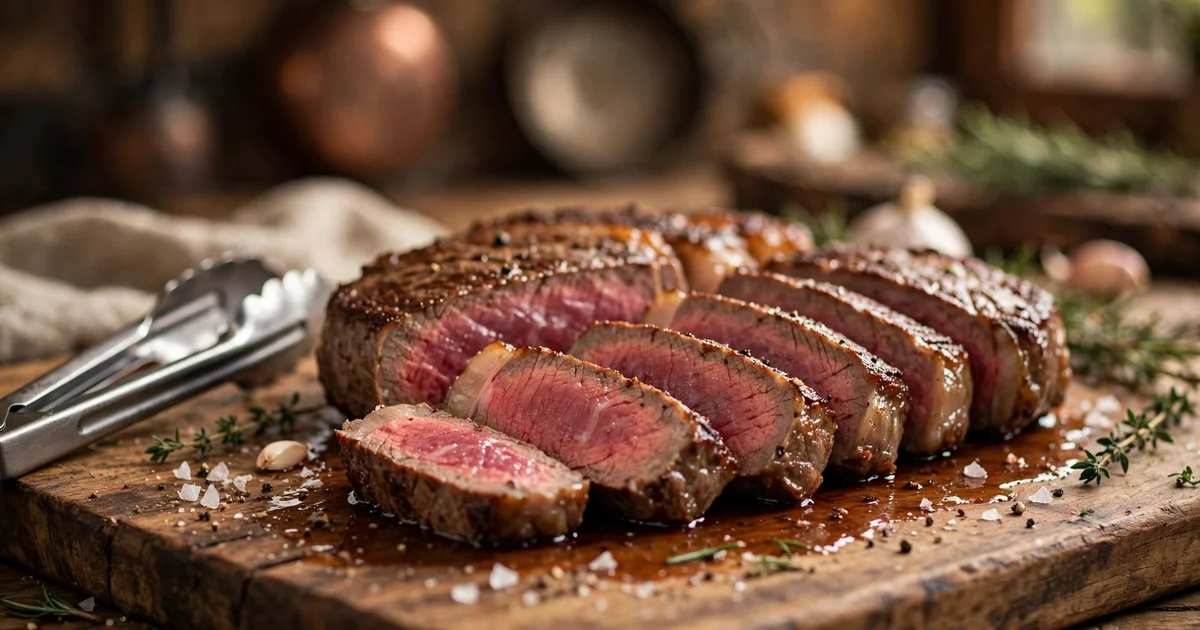
How long to rest steak after cooking is one of the simplest things to get right and one of the easiest to skip. For most steaks, rest the meat for about half the time it spent on the heat, which works out at 5 to 10 minutes. This guide gives resting times by cut and thickness, explains what resting actually does inside the meat, and shows how to rest a steak properly so it lands on the
How Long to Rest Steak After Cooking: Suggested Times by Cut and Thickness
The thicker the steak, the longer the rest it needs. A thick cut holds more heat, so its centre takes longer to settle. Thin steaks cool quickly and are ready sooner. Use this table as a guide, not a strict rule.
| Steak type | Suggested rest | Notes |
|---|---|---|
| Thin steaks, about 2 cm or thinner (minute steak, thin sirloin, frying steak) | 5 minutes | Lose heat quickly, so a short rest is plenty. |
| Standard steaks, 2 cm to 3 cm (sirloin, ribeye, rump, fillet) | 5 to 10 minutes | The range most home cooked steaks fall into. See our comparison of sirloin, ribeye and fillet. |
| Thick cut steaks, 3 cm to 5 cm (thick ribeye, T bone, thick fillet) | 10 to 15 minutes | Hold more heat, so the centre needs extra time to settle. Useful with our fillet steak guide. |
| Large joints and roasts, such as chateaubriand or a rib roast | 15 to 30 minutes | Rest uncovered or loosely tented so the outside stays dry. |
Two rules of thumb cover almost every situation. Rest the steak for about half the time it took to cook, so an 8 minute cook gets a 4 minute rest and a 12 minute cook gets about 6 minutes. Or allow about 5 minutes per inch of thickness, which is roughly 5 minutes per 2.5 cm. Both land you in the right place.
Why Resting Works: What Happens Inside the Steak
While a steak cooks, the heat tightens the muscle fibres near the surface. That squeeze pushes the juices toward the centre and the surface, and the meat is under a kind of pressure. Cut into it at that moment and the liquid runs straight out onto the board, leaving the slices drier than they needed to be.
Resting gives that process time to settle. As the outside cools a little, the temperature evens out and the fibres relax, so more of the juices stay inside the meat when you slice it. The slices hold their moisture and the texture is more even from edge to centre.
An honest note is in order. Some recent kitchen testing suggests the juiciness gain from resting is smaller than old cookbooks claimed, and that the real, practical benefit is what happens next: the steak keeps cooking gently after it leaves the heat. That carryover cooking is where resting earns its place, because it lets you take the steak off the heat at exactly the right moment and let it finish without you.
Carryover Cooking: Take the Steak Off the Heat Early
A steak does not stop cooking the moment it leaves the pan or grill. The outside is hotter than the centre, and that heat keeps moving inward during the rest. The internal temperature typically rises by 3 to 5°C while the steak rests, more in thick cuts and less in thin ones.
That means you should pull the steak off the heat slightly before it reaches your target doneness, then let the rest finish the job. Use a digital meat thermometer for certainty, and treat the table below as general guidance rather than exact figures.
| Target doneness | Take off the heat (general guide) | Typical rise during the rest |
|---|---|---|
| Rare | 46 to 49°C | 3 to 5°C |
| Medium rare | 52 to 54°C | 3 to 5°C |
| Medium | 57 to 60°C | 2 to 4°C |
| Medium well | 62 to 65°C | 2 to 3°C |
| Well done | 68 to 70°C | 2 to 3°C |
If you cook to the well done end of the scale, see our well done steak guide and the sirloin steak cooking times and temperatures for matching your times to your doneness.
How to Rest a Steak Properly
Resting takes no skill, but a few small details make the difference between a warm, juicy steak and a lukewarm one with a soggy crust.
- Move it off the hot pan. Lift the steak onto a warm plate or a wooden board. Leaving it in the pan keeps it cooking.
- Tent it loosely with foil. Drape foil over the top without sealing the edges. This keeps warmth in while letting steam escape, which protects the crust. Never wrap it tightly.
- Rest it somewhere warm. The top of a cooling oven, beside the hob or in a warm spot in the kitchen all work. Keep it out of draughts and away from an open window.
- Use the time well. Resting is the perfect window to make a pan sauce, warm the plates or finish what you plan to serve with the steak.
- Do not slice to check. Cutting in to see the colour defeats the whole purpose. Check doneness with a thermometer before the rest begins.
If you are cooking a pan seared ribeye or working through our complete guide to cooking steak, add the resting step to the end of the method and the rest of the recipe falls into place.
Common Resting Mistakes
Cutting into the steak too soon
This is the big one. Slicing within the first minute or two lets the juices pool on the board instead of staying in the meat. Give it at least the times in the table above.
Wrapping it tightly in foil
Tight foil traps steam against the surface and softens the crust you worked to build. Loose tenting keeps the steak warm without steaming it.
Resting it somewhere cold
A cold plate or a draughty windowsill undoes the good work. The steak cools faster than it should and arrives lukewarm. A warm plate and a warm spot are all it needs.
Resting for far too long
Resting has a limit. For a normal steak there is no extra gain past about 15 minutes, and the meat simply goes cold. As a food safety point, the FSA advises that cooked food should not be left at room temperature for longer than two hours, which normal resting times stay well inside. See the FSA guidance on cooking food safely.
Forgetting the rest on thin cuts
Thin steaks still benefit from a short rest. Five minutes is enough, and it also gives you a moment to get everything else to the table.
What Resting Does Not Do
Resting is worth doing, but it is not magic. A clear view of its limits will save you disappointment.
- It will not rescue an overcooked steak. Once the meat is past well done, no amount of resting brings back the texture. Choose the right cut for your taste first, with help from our ranking of the best beef cuts and the UK beef cuts diagram.
- It will not tenderise a tough cut. Resting helps a steak keep its juices, but it cannot change the nature of the cut. If you are unsure about rump, read whether rump steak is tender before you buy.
- Foil does not seal juices in. Covering a steak tightly does not push juices back into the meat. It traps steam and harms the crust.
- Longer is not always better. Resting for 30 minutes will not make a normal steak more tender. It will make it cold.
Frequently Asked Questions
Do thin steaks need resting after cooking?
They benefit, but only briefly. Give thin steaks about 5 minutes on a warm plate. The main gain is letting the temperature settle, and it also buys you time to serve everything together.
Should I rest a steak in the oven?
For a normal rest there is no need. If dinner is delayed, a low warm oven of about 60°C can hold a tented steak warm for up to 30 minutes. Much longer than that and the quality drops.
Does the resting rule change for a reverse seared steak?
Yes, slightly. A reverse seared steak has already cooked gently and evenly, so it needs less settling. Rest it for about 5 minutes after the final sear, loosely tented.
Is the red juice in steak blood?
No. The red liquid is mostly water mixed with myoglobin, a protein found in muscle. It looks dramatic on the plate, but it is not blood, and resting simply keeps more of it inside the meat where it belongs.
Can I rest steak too long?
Yes. Past about 15 minutes a single steak gains nothing more and starts to cool. For food safety, keep to normal resting times and never leave cooked meat sitting out for hours.
Once your resting is sorted, the rest of the meal matters too. Our rump steak guide covers one of the most popular budget friendly cuts, and the guide to where steak comes from explains the cuts behind the names on the label.